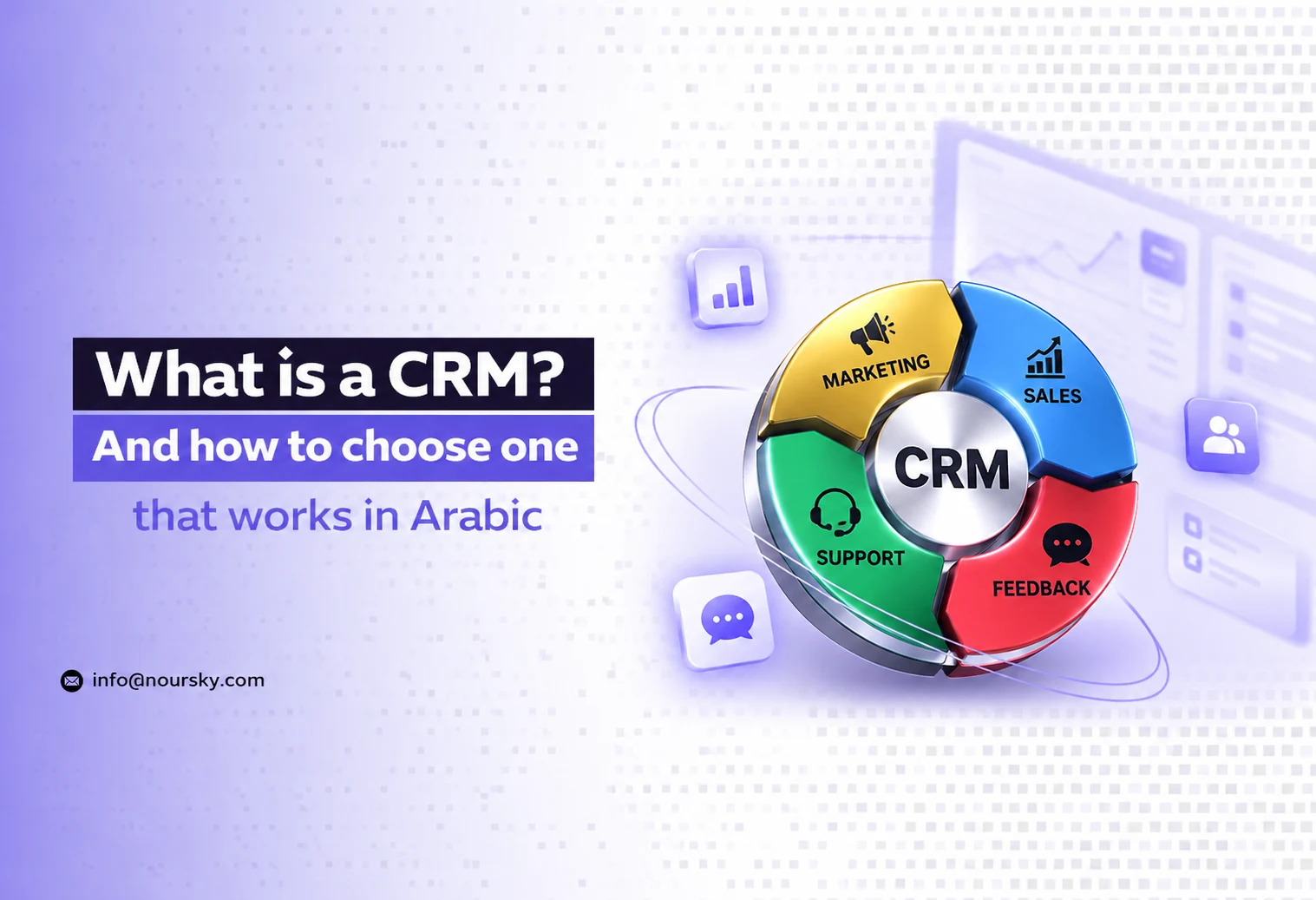
A CRM, or customer relationship management system, is the place that answers one question at any moment: where are we with this customer? Who they are, where they came from, what they said, what stage they’re at, and who owns the follow-up.
If today that answer is spread across WhatsApp chats, an Excel sheet and one employee’s memory, this article is for you.
What a CRM is, simply
Leaving the long definitions aside, any good CRM does four things:
- A record for every customer. Name, number, the channel they came from, and every conversation, call and quote in one place.
- Clear stages. Every customer sits in a stage: new inquiry, qualified, quote sent, then won or lost. You see the whole picture on one board.
- Tasks and follow-ups. The system reminds your team who to call today, instead of relying on memory.
- Reports. How many inquiries came in this month, how many became deals, and which channel brought the customers who actually pay.
Do you need a CRM at all?
Not every business needs a system. If your team is one or two people and inquiries are few, a tidy spreadsheet may be enough for now. If you recognise yourself in one of these, it’s time:
- You ask “where are we with this client?” and nobody knows.
- Inquiries are scattered across WhatsApp, Instagram, site forms and calls, with nothing tying them together.
- An employee leaves and their conversations leave with them, along with the customers they were following.
- You don’t know how many customers slipped away because nobody replied in time.
What a CRM must support to work in Arabic
Most global CRMs support Arabic on paper. The difference shows in daily use, so check these points before you choose:
- A real right-to-left Arabic interface, not a machine translation that breaks tables and names.
- A WhatsApp connection that shows conversations on the customer’s record, because most customers in the region start on WhatsApp.
- Search that understands Arabic names and international numbers in their different formats.
- Stages you can edit yourself to match how you sell, without calling a developer every time.
- Automatic lead assignment across the team, with permissions that set who sees what.
- Reports by channel that tell you where your ad spend deserves to go.
- Your data stays yours: you can export all of it at any time, and you’re not held hostage if you switch systems.
The software is rarely the problem. The setup is.
Many companies bought a CRM and abandoned it two months later. The reason is rarely the software itself; it’s that it was set up generically, nothing like how the team works: stages that don’t match reality, fields nobody fills in, and manual logging that’s forgotten in the first busy week.
- Map how you sell first, then build the stages around it, not the other way round.
- Start with one channel, usually WhatsApp, and add the rest once it works.
- As few fields as possible. Every extra field is one more reason the record doesn’t get updated.
- Automate the follow-up so it doesn’t depend on someone remembering.
- One owner per customer, visible to everyone.
A CRM your team doesn’t use isn’t a CRM. It’s a more expensive spreadsheet.
Questions to ask before you choose
- Are WhatsApp conversations logged automatically, or does the team copy them by hand?
- Who owns the data, and can you export all of it?
- How long does setup take, and who trains the team?
- Can you change stages and fields without a developer?
- What happens to your data if you cancel?
In short
A CRM isn’t software you buy; it’s a way of working your team commits to, and the software makes it easier. Choose a system that genuinely works in Arabic and connects to WhatsApp, then set it up around how you sell. If you’d like us to build it with you, that’s what we do in CRM; and if you want customers answered and recorded automatically, see the AI Employee.